
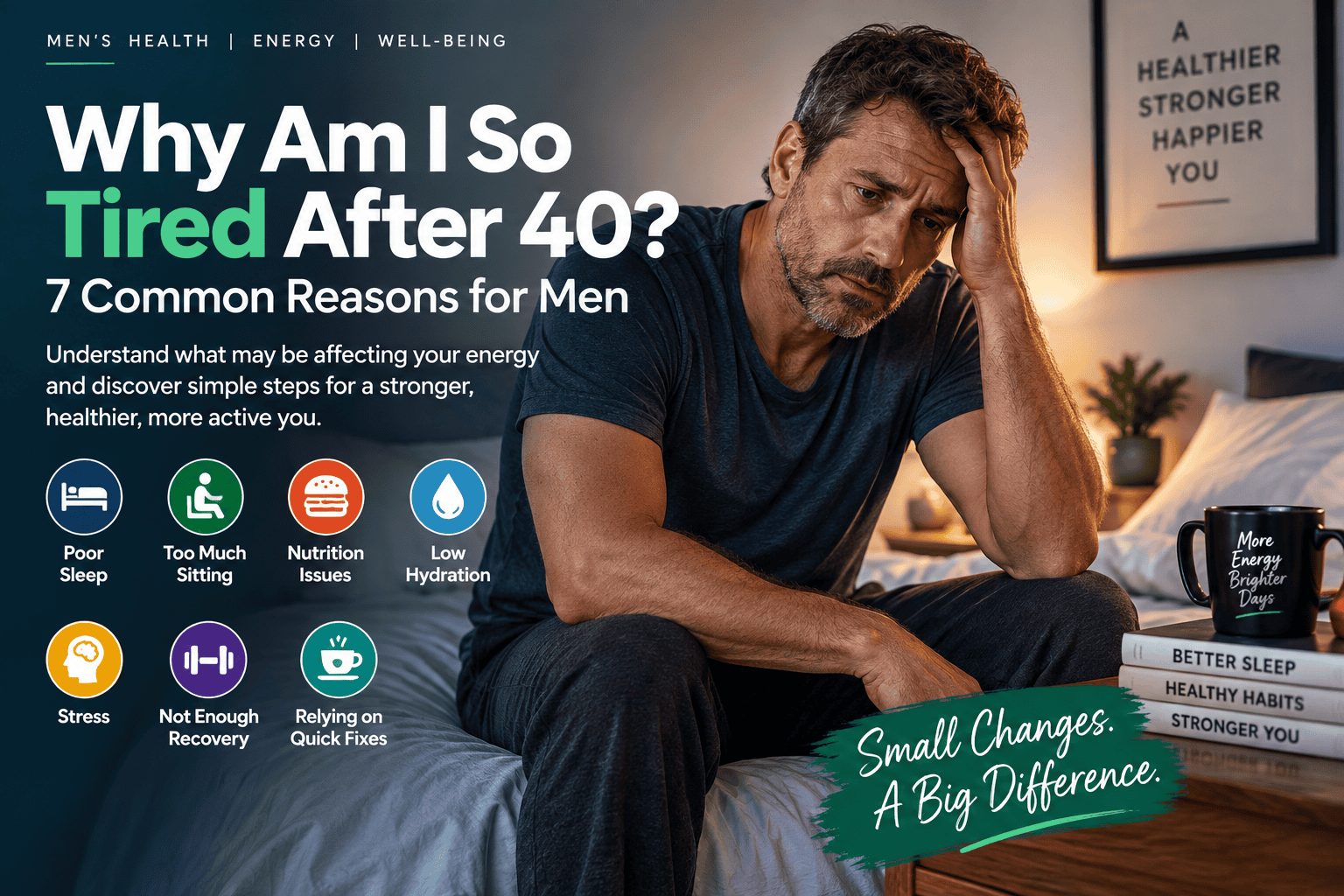
Why am I so tired after 40? It is a question many men begin asking when their energy, focus, or recovery no longer feels the same as it did years ago.
You may wake up feeling like you could use another hour of sleep. The afternoon slump may feel stronger. A busy workday might leave you more exhausted than expected.
Age itself is not necessarily the only explanation.
Sleep habits, nutrition, hydration, physical activity, stress, and your overall routine can all influence how energetic you feel.
If you are already looking for practical ways to improve your routine, read our guide on how to increase energy after 40.
Let’s look at seven common factors worth considering.
1. Your Sleep May Not Be as Restorative as You Think
Spending enough hours in bed does not always mean you are getting high-quality sleep.
An inconsistent sleep schedule, late-night screen use, caffeine later in the day, stress, and an uncomfortable sleeping environment may all interfere with a good night’s rest.
One useful first step is consistency.
Try maintaining similar sleeping and waking times throughout the week. Creating a relaxing evening routine can also make it easier to transition from a busy day into sleep.
If tiredness continues despite getting adequate rest, consider discussing it with a healthcare professional.
2. Your Daily Routine Has Become Too Sedentary
It sounds contradictory, but spending most of the day sitting can sometimes leave you feeling sluggish.
Many adults spend hours moving between a desk, car, couch, and bed with very little physical activity in between.
Regular movement supports cardiovascular fitness, muscle function, sleep, and overall well-being.
You do not necessarily need an intense workout every day.
Walking, cycling, swimming, resistance training, or simply taking regular movement breaks can help create a more active lifestyle.
If you keep wondering why am I so tired after 40, looking at your sleep, nutrition, hydration, stress, and activity levels can be a useful place to start.
3. Your Nutrition May Be Working Against You
Food provides the nutrients your body needs to function.
A routine dominated by heavily processed foods, sugary drinks, and irregular meals may make maintaining consistent energy more difficult.
Instead, focus on balanced meals containing foods such as vegetables, fruit, whole grains, healthy fats, and quality protein sources.
Protein can be particularly useful as part of a balanced diet because it supports muscle maintenance and normal body functions.
The objective is not to follow a perfect diet.
It is to develop eating habits that you can maintain consistently.
4. You May Not Be Drinking Enough Water
Hydration is easy to overlook.
A busy morning can quickly turn into an afternoon before you realize you have barely had any water.
Individual hydration requirements vary according to factors such as activity level, weather, diet, and overall health.
Keeping water readily available and drinking regularly throughout the day is a simple habit that can help support normal body function.
If you exercise or spend significant time outdoors in warm weather, paying attention to hydration becomes even more important.
5. Stress Can Drain Your Energy
Not all tiredness comes from physical activity.
Mental stress can be exhausting too.
Work deadlines, financial responsibilities, family obligations, constant notifications, and lack of downtime can keep your mind engaged throughout the entire day.
That makes recovery more difficult.
Regular exercise, outdoor walks, hobbies, time with family or friends, and periods away from screens can all be part of a healthier stress-management routine.
Sometimes improving energy means adding healthy habits.
Other times it means removing unnecessary demands from your day.
6. Your Body May Need More Recovery
Recovery can become increasingly important as your lifestyle changes.
Trying to combine demanding workouts, a busy career, family responsibilities, poor sleep, and an inconsistent diet may eventually leave you feeling exhausted.
More exercise is not always better.
A balanced routine includes activity and recovery.
Pay attention to how you feel after exercise and give your body appropriate time to recover between demanding sessions.
This can include adequate sleep, balanced nutrition, hydration, and lighter activity between harder workouts.
7. You May Be Relying Too Much on Quick Energy Fixes
Coffee, energy drinks, and sugary snacks may provide a temporary feeling of increased alertness.
But they do not replace the foundations of healthy energy.
If you regularly need another coffee just to make it through the afternoon, it may be worth looking at what is happening earlier in your day.
How well did you sleep?
Did you eat a balanced breakfast or lunch?
Have you had enough water?
Have you moved today?
These questions can sometimes reveal habits that deserve more attention.
Why Am I So Tired After 40 Even When I Sleep Enough?
If you regularly get adequate sleep but continue feeling unusually tired, it is important not to assume that age is automatically responsible.
Persistent fatigue can have many possible explanations, and some require professional evaluation.
Instead of trying to diagnose the reason yourself, consider discussing persistent or unexplained changes in your energy with a qualified healthcare professional.
This is particularly important when tiredness is new, significant, persistent, or interfering with everyday activities.
Building a Better Daily Routine After 40
For many people, improving daily habits is a practical place to start.
Look at your routine as a whole:
Are you sleeping consistently?
Are you physically active?
Are your meals balanced?
Are you staying hydrated?
Are you giving yourself enough recovery time?
Small improvements across several areas can be more sustainable than searching for one dramatic change.
For a step-by-step approach, continue with our guide to 9 everyday habits that may help support energy after 40.
What About Men’s Wellness Supplements?
Lifestyle habits should remain the foundation of your wellness routine.
However, some men also research dietary supplements as part of their overall approach to nutrition and wellness.
One product you may encounter while researching this category is Fluxactive Complete.
Before purchasing any supplement, look at the ingredients, directions, warnings, and other product information and consider whether it is appropriate for your individual circumstances.
If you want to see the current information about Fluxactive Complete, you can visit the product page below.
Disclosure: This page contains an affiliate link. We may receive a commission if you make a purchase through this link, at no additional cost to you.
Final Thoughts on Feeling Tired After 40
If you have been wondering why am I so tired after 40, start by examining the basics before looking for complicated solutions.
Sleep, movement, nutrition, hydration, stress, and recovery can all influence how you feel throughout the day.
Most importantly, do not dismiss persistent or unexplained tiredness simply because you are getting older. When something feels significantly different or continues despite lifestyle improvements, professional medical guidance is appropriate.
For more information about men’s energy and healthy routines, read Why Men Lose Energy After 40.
The answer to why am I so tired after 40 may be different for each person, which is why looking at your overall routine is important.